With almost 70% of the world’s population actively using the internet, can offline marketing still compete with digital marketing methods? If it can cut through the noise, what benefit does it bring to your audience that can’t be achieved with a quick social post, email, or paid ad?
We’ve shared a lot of content about how, even in 2025, print marketing definitely isn’t dead (because, truthfully, it isn’t!). In this blog, we’re going to take a deep dive into a few different offline marketing methods - not just in print - so you can see the potential impact of adopting a fully multi-channel marketing approach.
We believe the best marketing happens across both online and offline channels, and we’re here to show you why. We’ll cover:
- What is Offline Marketing?
- Effective Types of Offline Marketing for Businesses
- Offline Marketing in 2025: Some Key Stats to Consider
- Our Favourite Offline Marketing Examples
- The Benefits of Offline Marketing
- Ready to Take Your Marketing Offline?
.jpg?width=600&name=31W%20-%20Sheffield%20City%20Region%20(1).jpg)
What is Offline Marketing?
Offline marketing is exactly what it says on the tin — any marketing that’s done offline (i.e. away from the internet).
With so many of us tied to our screens, it might be difficult to imagine any form of advertising other than digital being able to reach its audience. But it’s for precisely this reason that offline marketing is so effective at cutting through the noise.
If you’re new to offline marketing, we’ll be outlining some key methods you might want to include in your upcoming strategy. If you’re already an omnichannel pro, you’ll find some of our favourite offline marketing examples, which might just strike a note and inspire your next campaign.
Effective Types of Offline Marketing for Businesses
Also known as “traditional marketing”, when you choose to take your marketing offline, you’ll have a few different strings to your bow, including:
- Printed materials
Like ads in newspapers or magazines, printed brochures or flyers, posters, or even business cards and branded merchandise
- Direct mail
Sending printed materials direct to the homes or businesses of your audience (which boasts an impressive success rate)
- Radio and TV
Like adverts or interview slots on relevant radio stations or channels
- Outdoor advertising
Also known as “out-of-home marketing” — think billboards, posters, and other signage or branded interactions displayed in public spaces
- Events and trade shows
A great way to connect with people who are already primed to receive your messaging — by attending an industry event or conference, or hosting one of your own!Offline Marketing in 2025: Some Key Stats to Consider
Sometimes the stats speak for themselves, so we’ve included a few key stats below that might just give you some food for thought…
- Approximately 70% of drivers make purchasing decisions while driving, with thanks to marketing efforts like billboard ads (Source: MyCodelessWebsite)
- 82% of customers rely on print ads when deciding what to buy (Source: Social Shepherd)
- From a marketing perspective, offline marketing now accounts for 45% of all marketing efforts (Source: MyCodelessWebsite)
It’s no longer enough to be engaging with your audience exclusively in the online space. To truly maximise your impact, reach everyone in your target audience, and silence the noise from your competitors, investing in a strategy that combines the best of both worlds (online and offline) is where most brands are finding their success. Learn more about the omnichannel approach with our simple guide to strategic print marketing.
Offline Marketing in 2025: Some Key Stats to Consider
Sometimes the stats speak for themselves, so we’ve included a few key stats below that might just give you some food for thought…
- Approximately 70% of drivers make purchasing decisions while driving, with thanks to marketing efforts like billboard ads (Source: MyCodelessWebsite)
- 82% of customers rely on print ads when deciding what to buy (Source: Social Shepherd)
- From a marketing perspective, offline marketing now accounts for 45% of all marketing efforts (Source: MyCodelessWebsite)
It’s no longer enough to be engaging with your audience exclusively in the online space. To truly maximise your impact, reach everyone in your target audience, and silence the noise from your competitors, investing in a strategy that combines the best of both worlds (online and offline) is where most brands are finding their success. Learn more about the omnichannel approach with our simple guide to strategic print marketing.
Our Favourite Offline Marketing Examples
In recent years we’ve seen some of the biggest brands embracing offline marketing in a big way. Some campaigns have made us laugh, others have made us think, some have even been great conversation starters. Mostly, they’ve stopped us in our tracks, made the campaign impossible to ignore, and been a source of inspiration to marketers everywhere. Here are just a couple of our favourites…
Example #1 - The Barbie Movie
We know, you saw this one coming — how could you not? What the Barbie movie team managed to achieve with their marketing will no doubt be a source of study for marketers for years to come.
Barbie was the must-see film of 2023, and it achieved this title long before it hit cinema screens. Thanks to an ingenious “breadcrumb” strategy (and, granted, a huge marketing budget) the Barbie brand took over the world both online and offline, and it became increasingly difficult to ignore.
It didn’t just involve the usual pre-release promo, like trailers, magazine covers, and poster ads — but even when it did, it was all so well thought-out and on-brand (we’re looking at Margot Robbie’s impressive Barbie tour wardrobe). But beyond all the usual film-related marketing, we enjoyed seemingly endless brand partnerships that gave fans the opportunity to share the Barbie love — by wearing Barbie clothing, using Barbie make-up, dressing their pets in the Barbie brand, completing their outfit with Barbie accessories, decorating their home with Barbie soft furnishings, travelling with Barbie luggage, eating Barbie food, driving Barbie cars, skating with Barbie skates, and even staying at a real-life Barbie dreamhouse.
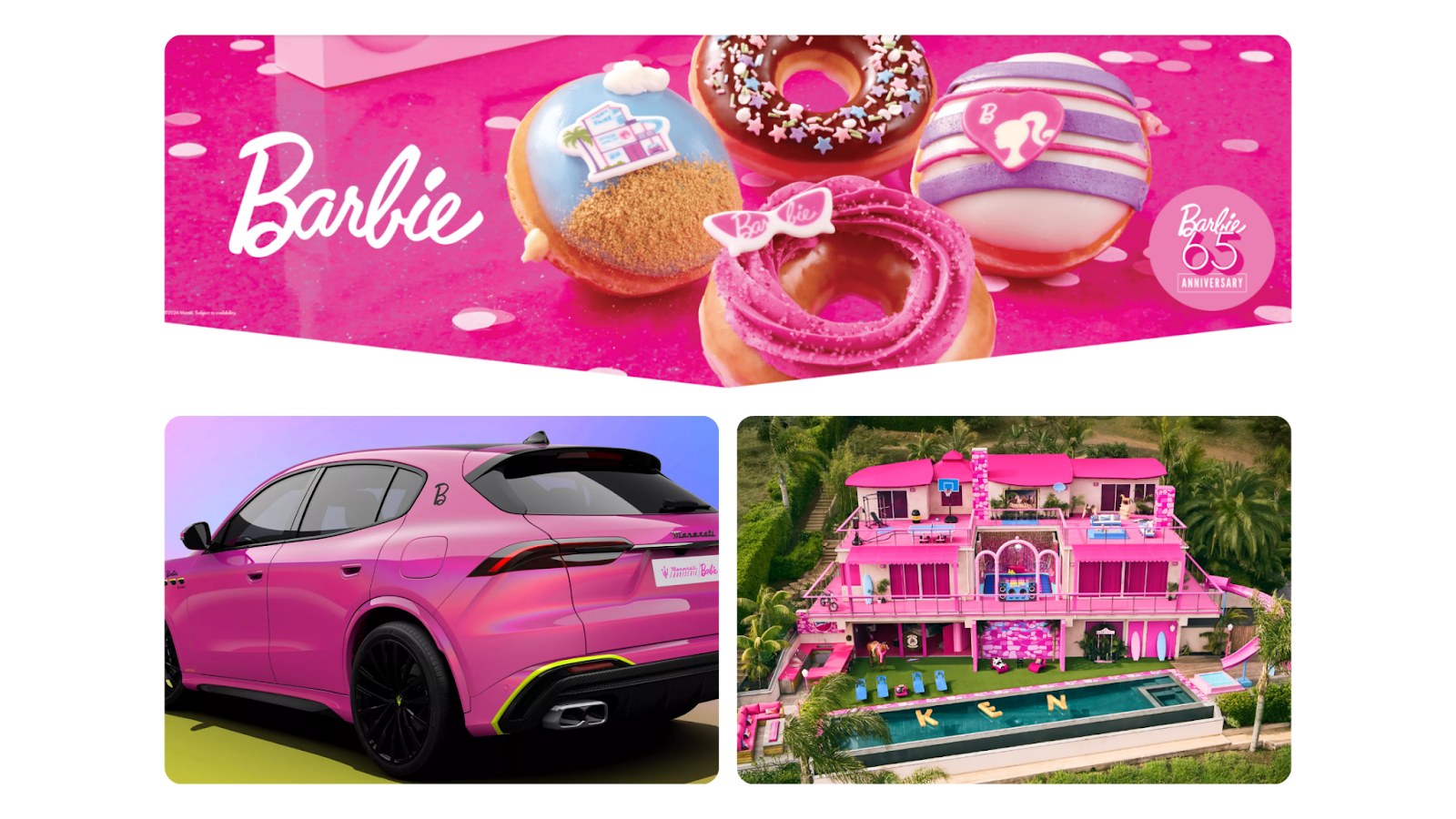
(Featured: Barbie Krispy Kreme donuts, Barbie Maserat, Barbie Malibu Dream House Airbnb)
A large-scale billboard campaign saw pink Barbie billboards pop up everywhere, and when fans finally arrived at the cinema to watch the newly released film (inevitably wearing pink), they were greeted by life-size Barbie packaging that provided a perfect opportunity to join in on the fun, be a part of the cultural moment, take pictures, and create another piece of media that would contribute to the Barbie universe.
Of course, we can’t forget that the marketing budget for the Barbie movie was in excess of $100M — far beyond the budget of the vast majority of businesses. But what the Barbie campaign really demonstrates is that by thinking creatively about your marketing efforts and brainstorming outside of the box, you can engage audiences in new and exciting ways, and it can really pay off.
Example #2 - Jellycat Pop-Up Shops
This one hits big on the cuteness scale, but in terms of marketing too, it’s up there. Soft toy company Jellycat is known for its themed pop-up shops that go viral on social media, and the Fish & Chips Experience at London Selfridges is no exception.
There are so many reasons we love what the Jellycat team does with their pop-up experiences, but a big part of it is how each experience is localised to the country it appears in. Usually centred around a particular cuisine enjoyed in that country, the Jellycat pop-ups are themed accordingly and bring with them a limited edition series of Jellycat soft toys for visitors to enjoy. For example:
- London got a pop-up fish and chips van, complete with Lily Fish, Charlie Chip, Vinny Vinegar, Salty Steve, and Dot & Peg Mushy Peas
- In New York, a Jellycat diner opened, welcoming Fran Pancakes, Rene Waffle, Amuseables Bagel and Amuseables Burger to the Jellycat collection
- In Paris, we saw the launch of a Jellycat patisserie, with Collette Tarte Au Citron, Brigitte Brioche, Fleurette Tarte Aux Fraises, and Mia Macaron joining the crew
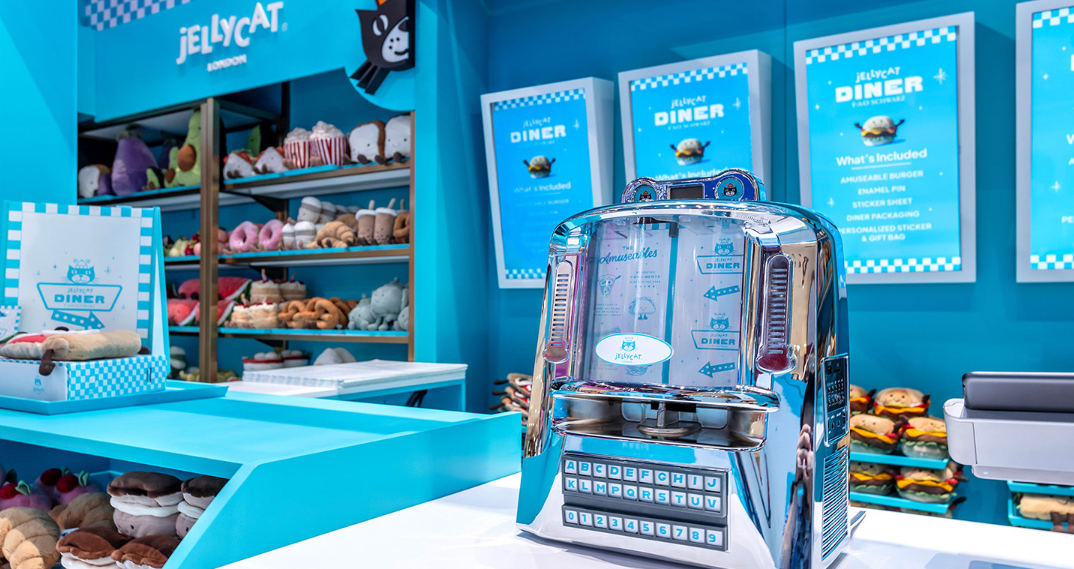
(Source: Jellycat)
But this is only half of the fun. Jellycat takes their branding so seriously that it isn’t just the pop-up itself that falls in line with the theme — the whole experience is crafted to deliver something entirely unique and on-brand. For the Fish & Chips Experience, this includes fake fryers, where staff will take a customer’s chosen Jellycat toy and “fry” it up, before “adding seasoning” from Vinny Vinegar and Salty Steve, and wrapping up the order in branded Jellycat newspaper — just like your standard chip shop!
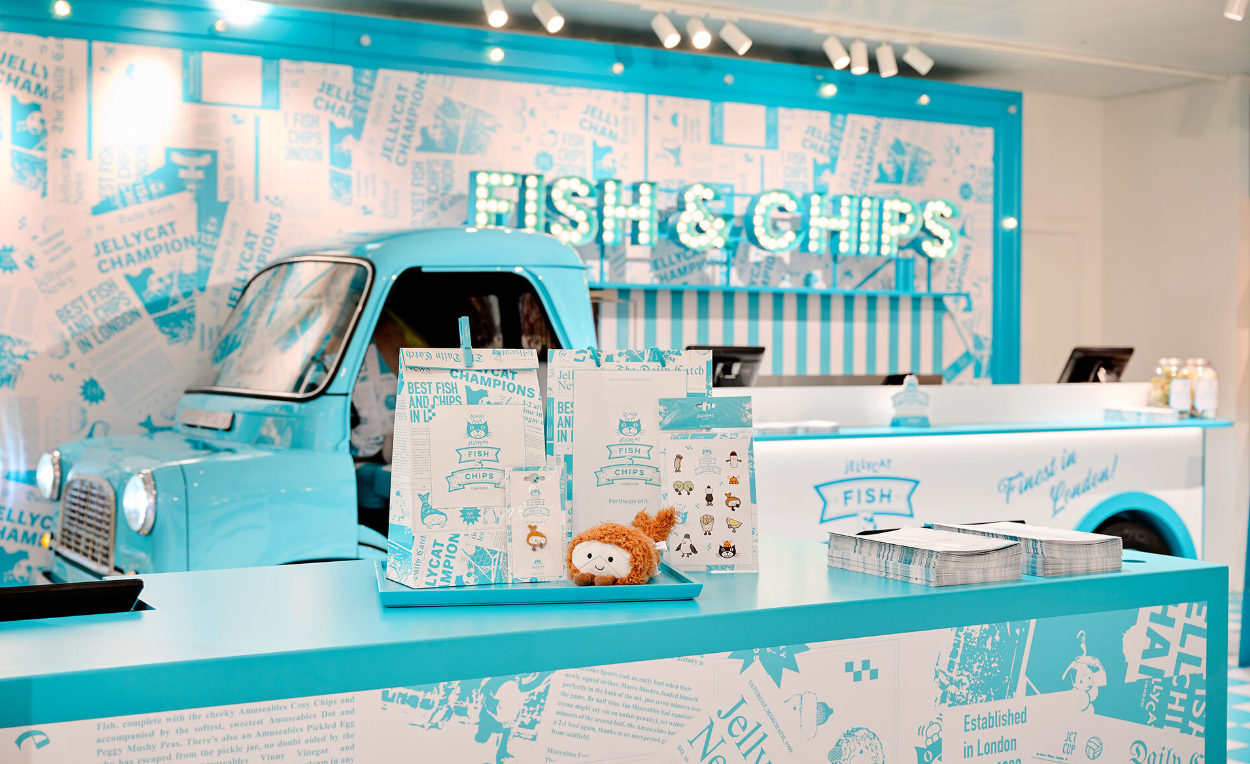
(Source: Jellycat)
And the best part for us? What they’ve done with print. With every order, visitors receive an exclusive merchandise pack with enamel pins and sticker sheets featuring the new and exclusive characters. Every purchase comes in a branded gift bag with that much-loved newspaper wrapping, featuring Jellycat news stories and a real crossword puzzle (which apparently hides an extra surprise).
When it comes to creating memorable and engaging experiences that entice people in the real world while stirring up a storm online, AND leveraging offline marketing methods to encourage audiences to continue their engagement with the brand, Jellycat wins the game.
The Benefits of Offline Marketing
We’re not saying digital marketing doesn’t have its benefits, but there are some things that print and offline marketing campaigns can do that online marketing just can’t…
-
Real-Life Interactions
When someone receives a piece of direct mail or engages with a pop-up on the high street, they have a physical interaction with the brand which, in turn, provides a sensory experience that’s more likely to be remembered.
-
Local Engagement
Offline marketing opens up a world of opportunity to truly localise your marketing and messaging so that it’s more engaging and relevant for ideal audiences in a specific location.
The way Jellycat brands their pop-ups is one example, but you can think of Specsavers’ ingenious airport ads as another. Specsavers decided to switch things up and give travellers a minor scare by updating the billboards at the airports in Sydney and Melbourne. Those arriving in Sydney were greeted by a billboard that read “Welcome to Melbourne”, while those getting off the plane in Melbourne were welcomed to Sydney.
After a brief moment of panic - cleared up by the brand’s classic “Should’ve gone to Specsavers” line running across the bottom of the ad - the billboards left travellers with a smile on their face and a story to tell their friends who could share in the laugh.
-
Experiences That Resonate
We write quite often about print marketing’s enhanced ability to resonate with audiences, but that’s because it’s true. Engaging with something tangible - something that exists in the real world beyond the screens we all carry around with us - often makes the experience more memorable.
Check out our blog on modern print marketing trends for a deeper dive into why this is the case.
-
Stand-Out Events
Breaking free from the restrictions of on-screen content to deliver something in-person can truly elevate and amplify your broader marketing efforts.
When brainstorming for your in-person events or out-of-home marketing campaigns, you’ll need to think hard about the experience you want to create. Ultimately, it needs to be something that’s fun, draws people in, gets people talking, and promotes further brand engagement — whether that’s through free giveaways (like Carlsberg’s free beer dispensing billboard), unique experiences (like Volkswagen’s piano stairs), or pure novelty (like the Jellycat pop-ups).
All this being said, it’s very rare that any modern audience can be effectively engaged by a brand that’s solely pursuing one marketing channel, be that online or offline. The best way to reach your audience, retain their attention and stay memorable is by leveraging the best bits of both methods. We talk more about this here.
Ready to Take Your Marketing Offline?
Combining print and digital can make online campaigns 400% more effective. Learn more about how you can maximise the impact of your marketing efforts with our comprehensive guide to print marketing.
